Flour, Water, Time and Nerve: The Loaf That Opens Every Table
The first thing you touch at Bistro 8 is not a menu. It is a basket.
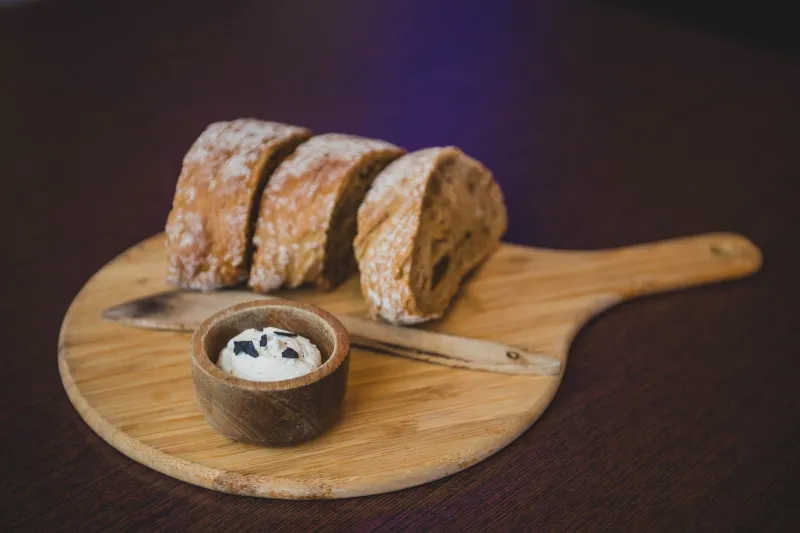
It lands within ninety seconds of your coat coming off — a shallow willow number, a folded linen napkin, a small dish of butter that has been out of the fridge since half past three. The loaf inside is still faintly warm on a good day, and it tears rather than slices, which is the first clue that it has not been anywhere near a plastic bag.
We have served it this way since the room opened. It is the only thing on the table that will never have a price beside it, and it is also the thing we spend the most time arguing about.
The bakery three miles out
Our bread comes from Field & Ferment, a two-oven outfit in a converted agricultural shed three miles east of town. It is run by a baker called Marta, who trained in Sheffield, spent four years on night shifts in a city bakery, and came back here because she wanted to make fewer loaves more slowly.
We buy two sorts from her: a country sourdough with 20 per cent wholemeal and a splash of rye, and a softer milk loaf for Sunday lunch. Both are built on a levain she has kept going since 2019 — genuine history, that — and both get a long, cool ferment. The sourdough is mixed at nine in the morning, shaped at four, and baked at six the next day. Marta calls it "a day and a bit". We call it the reason the crust shatters instead of bends.
She delivers by van at twenty to seven, in stacked crates that smell of malt and hot flour. If the roads are bad — and in a wet November they often are — she comes in her own car with the loaves belted into the passenger seat. That is not a marketing story. That is just what happens when your baker lives four minutes from the farm that grows her wheat.
Why slow costs more, and why we pay it
Marta's bread costs us roughly £3.10 a kilo. The industrial wholesale loaf that many kitchens buy costs closer to £1.90, and it arrives sliced, bagged and consistent to the gram. We have tried the cheaper option exactly once, in our first winter, and the difference was not romantic. It was obvious. The crumb was tight and damp, the crust paled by mid-service, and the basket came back half full.
So we pay the difference. A table of two gets through about 300g of bread and a decent knob of butter, which puts the true cost of the basket at just under 90p before anyone has ordered a drink. On a busy Friday that is real money. It is also, we think, the best 90p we spend all night.
There is a practical side to this. Marta bakes to a standing order, not to our daily guess, so we are never short and rarely long. What does come back — usually four per cent of the basket, more on quiet Mondays — goes into a deep tray by the pass. The ends become croutons. The stale slices become the brown bread ice cream that sits under the treacle tart. The heels go home with whoever is closing. Nothing from that bakery has yet met the bin.
The quiet arithmetic of not charging
We could charge £4.50 for the basket. Plenty of good restaurants do, and I am not here to scold them. But charging changes the transaction. The moment bread has a price, it becomes a purchase to be judged, and the guest starts doing sums: is this loaf worth four pounds fifty? Is the butter salted enough to justify it? Fair questions, but not the ones we want at the start of a meal.
Keeping it free does something simpler. It says the table is yours now. It buys us a few minutes of calm while you decide, and it means the first thing you taste is something we are quietly proud of. That is worth more than the margin.
The other reason is less noble and more honest: the basket is a tell. If a kitchen serves good bread without charging, it is probably not cutting corners on the fish or the coffee. If it serves poor bread at a premium, you can draw your own conclusions. We would rather be in the first camp.
Butter, salt and the warm plate
A loaf is only half the argument. Our butter is cultured, from a Somerset dairy, and it comes in 5kg blocks that we salt lightly by hand with Anglesey sea salt. It sits out at room temperature from mid-afternoon — never microwaved, never melted — so it spreads without tearing the crumb. In winter the plates are warmed; in summer they are not. Small thing. Noticeable thing.
We also keep a separate, sealed gluten-free loaf from a dedicated bakery for anyone who needs it. It is not an afterthought, and it is not the same bread. It arrives wrapped, is opened at the table, and is never cut on the same board. That is the least we can do.
What the basket says before the menu does
The basket is the first editorial statement a bistro makes. Before you have read a word about provenance or seasonality, you have already met the kitchen's standards in your hands. Ours arrives with a little flour still on the base and a dish of butter that has been thought about. It is not free because bread is cheap. It is free because we decided, early on, that the first thing you touch should be the thing we are least tempted to compromise.
So when the basket comes back to the pass with a heel left in it, we do not take it personally. We wrap it, put it by the staff tea urn, and get on with service. The last slice is always for the kitchen. That feels about right.