Three O'Clock, Chalk in Hand: The Daily Rewrite Behind Dinner

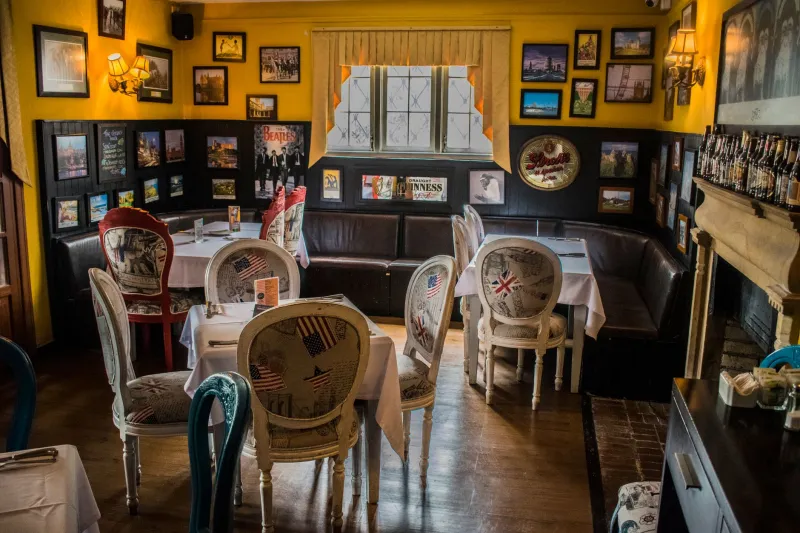
Photo: Eowyn1976, CC BY-SA 4.0, via Wikimedia Commons
At 3pm the lunch crowd has gone, the pass has been wiped down, and the kitchen has that particular hush you only get between services. The coffee machine ticks as it cools. Someone is stacking plates. And on the wall by the door, the chalkboard is not so much erased as edited.
At Bistro 8, the evening menu is written after lunch, not before it. On paper that sounds like a scheduling quirk. In practice it is closer to a house rule. The morning delivery has already arrived, the weather has already made its case, and lunch service has already told us what the kitchen is holding. By three o'clock we know more than we did at ten. So we use it.
The delivery van has the first word
Local sourcing is not a sticker on a window. It is a series of small, daily negotiations. A grower two villages over sends what is ready, not what we ordered in a fantasy spreadsheet. The fish van comes with whatever the coast has allowed that morning. A box of greens might be outstanding; the next might be smaller than expected, or leafier, or bolted slightly in the unseasonal warmth. You cannot write a fixed menu around that and call it honest.
So the afternoon rewrite starts with the delivery notes. What came in? What needs using first? What is too good to bury under a sauce? The chef reads the boxes the way a sub-editor reads copy: looking for the strongest line, and the bit that needs cutting. A tray of beautiful young leeks might push the chicken pie aside for a night. A late glut of quince might turn the pudding into something simpler and better. The menu is not a monument. It is a response.
Lunch is a preview, not a problem
There is a useful myth in restaurant kitchens that lunch and dinner are separate worlds. At Bistro 8 they are more like two conversations in the same room. Lunch tells us how the soup is eating, whether the bread is holding, how much of the braise is left, and whether the kitchen has the energy for a more ambitious evening plate.
That does not mean dinner is leftovers. It means dinner is informed. If the lunchtime roast has left a little pork shoulder, the evening special might become a warm sandwich with pickles and a sharp herb salad — the sort of thing that makes sense on a dark November evening but would have been a stretch to predict on Monday morning. If the lunch service has wiped out the greens, we ring the supplier or rethink the garnish. Nobody at the pass gets sentimental about a plan that no longer matches the kitchen.
The rewrite also protects the diner from the worst kind of menu: the one that promises the same twelve dishes every day of the year, regardless of season, weather or what is actually in the larder. A printed menu can look reassuring. A menu that changes because the ingredients have changed is more useful.
The weather outside is an ingredient
By three o'clock in November, the light is already going. If it has been raining sideways since noon, people will want something braised, something spoonable, something with a bit of starch and a lot of gravy. If the afternoon has turned unseasonably mild, the same menu can feel heavy before the first order is taken.
We talk about this at the pass the way other people talk about traffic. The forecast is not background noise; it is a factor in how a plate should land. A cold, clear night might push the fish towards a richer butter sauce. A wet, miserable Tuesday might make the lentils and roots more appealing than the salad. That is not dumbing down the cooking. It is cooking for the room you are about to serve.
Chalk, not stone
There is a practical reason for the 3pm rewrite: chalk is faster than print. But the deeper reason is that a fixed menu can quietly turn into a lie. If the board says 'market greens' and the market has sent something else, the kitchen either scrambles or pretends. We would rather rub out a line and write a better one.
That is also why the evening menu is not simply a longer version of lunch. At three o'clock we ask what the room needs. Something quick before the theatre? Something slow for a table that has booked the whole evening? A pudding that can be made from the fruit that arrived slightly riper than expected? The answers change the shape of the menu, not just the specials board.
It helps that the kitchen is small enough for the conversation to be short. There is no committee, no brand police, no need to check whether a dish fits a strategy deck. The chef, the sous and whoever is on the pass that day look at the delivery, the leftovers, the weather and the bookings. Then someone picks up the chalk.
What it means at your table
For a diner, the 3pm rewrite is mostly invisible. You sit down, you read the board, you order. But it is the reason the menu can feel a little different from the website, and the reason the staff might say 'the lamb has changed slightly' without apologising for it. It is also the reason a local bistro can serve a better plate than a bigger kitchen with a fixed spec sheet and a van from a central depot.
Honest sourcing is not just about where the ingredients come from. It is about being willing to change your mind when they arrive. At Bistro 8, three o'clock is when that happens: a quiet hour, a cup of tea going cold, and a menu being written for the evening that is actually in front of us. It is not indecision. It is the most practical kind of local cooking we know.