The Last Pinch Is Yours: Notes on Leaving the Seasoning Alone

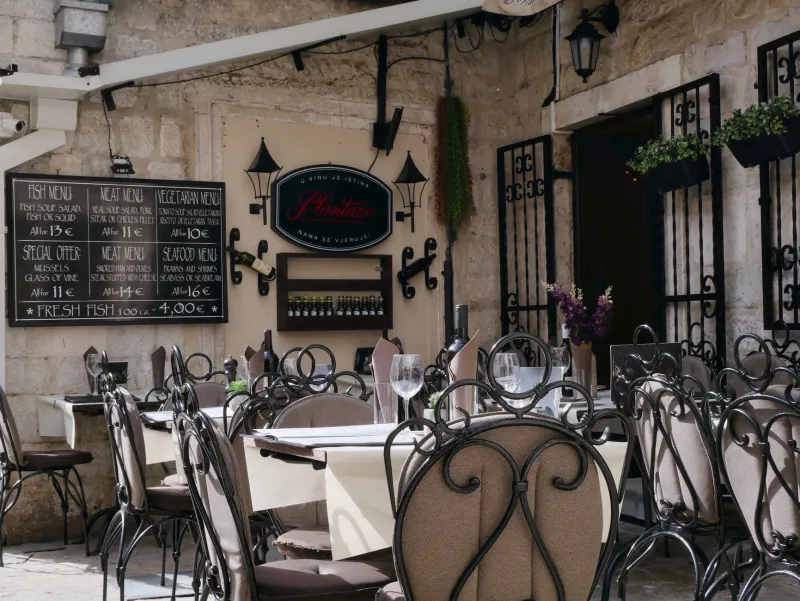
Photo by Photo by Marco J Haenssgen on Unsplash on Unsplash
A bowl of soup arrives. Alongside it, a little white dish with a heap of flaky salt in it, a pepper mill that actually grinds rather than dusts, and a squat bottle of cider vinegar with a handwritten label. Nobody says a word about any of it. That's rather the point.
We get asked, occasionally, whether it's a bit of a cop-out. Isn't the kitchen supposed to know best? Has the chef gone home? The answer to both is no, and the reasoning behind that unassuming little dish is more interesting than it first looks.
What the Kitchen Actually Owes You
A bistro owes you a plate that has been thought about. Someone stood at a stove and decided how the thing should taste — how much butter, how long in the pan, whether the lemon goes in at the start or the end. That's the cooking. It's not negotiable, and it isn't something you can fix at the table with a grinder.
But there's a difference between seasoning a dish and seasoning a person. The first is craft. The second assumes the kitchen knows the exact state of your tongue, your morning, your medication, your age, the fact that you've been on your feet since six and your sense of taste has gone slightly peculiar as a result. It doesn't. Nobody does.
So we cook the plate properly, then stop a fraction short of where we'd take it for ourselves. Not under-seasoned — that would be a swizz — but left with a little room. A margin, if you like, for the person who's actually going to eat it.
Cooking Isn't Correcting
Here's the distinction I keep coming back to. Correcting is what happens when a kitchen gets something wrong and hopes you won't notice. A bland sauce, a flat gravy, a piece of fish that's had the life boiled out of it and then been buried under salt. That's not a conversation, that's an apology.
Cooking is different. Cooking is a decision, made once, confidently, and then handed over. The salt dish on the table isn't there because we couldn't be bothered. It's there because the final adjustment is a matter of taste, and taste is not a kitchen's business once the plate has landed.
There's also a practical truth nobody talks about much: salt keeps working. A dish that tastes perfect at the pass can taste a shade more aggressive by the time it's crossed the room, been photographed, and had a conversation had over it. Better to leave the last grain to the person with the fork in hand.
A Small Dish of Something Worth Grinding
If you're going to invite people to season their own food, the least you can do is give them something decent to do it with. Table salt that's been sat in a damp cellar for a fortnight is an insult dressed up as humility.
Ours comes from a two-person salt works on the Essex marshes — a setup so small that when the weather turns, the whole operation turns with it. They rake and dry and bag it themselves, and the flakes come out irregular, some big enough to crunch between your teeth, some fine enough to disappear. It's the sort of salt that behaves differently depending on how you use it: a pinch rubbed between the fingers dissolves into a sauce, while a few flakes dropped on top of a roast carrot give you little bursts of savouriness as you eat.
We buy it by the sack and decant it into those little dishes fresh each service, because flaky salt goes soft and sulky if left sitting out. It's a two-minute job before opening. It's also the difference between a gesture and a gimmick.
The Vinegar Question
Pepper is easy. Everyone understands pepper. Vinegar causes more confusion, and I think that's a shame.
A good cider vinegar from an orchard a few counties over does something that no amount of extra cooking can replicate — it lifts. A splash on a bowl of lentils, on a plate of greens, on anything that's been roasted until sweet, and suddenly the whole thing sits up straighter. It's the cheapest trick in the kitchen and one of the oldest.
We put a bottle out because there's a particular kind of diner who knows exactly what they want and would rather not have to ask. You can spot them: a quick glance at the table, a small nod, a splash, and then they get on with their lunch. Giving them that bottle is a form of respect. It says we know you know what you're doing.
Why It Keeps Us Honest
There's a less noble reason too, and I'd rather say it plainly. Leaving the seasoning on the table keeps the kitchen from hiding.
If a dish needs three turns of the mill and half the salt dish to come alive, that tells us something. And because the dish is right there in front of you, it tells you something as well. There's no sauce to blame, no garnish to deflect attention. A plate that arrives properly cooked can survive a bit of scrutiny. A plate that's been over-salted to disguise a shortcut can't — and once you've added a pinch yourself, there's no hiding behind the chef's judgement either.
That's a useful bit of pressure. It nudges us towards doing the work earlier, in the pan, where it counts, rather than leaning on the condiments to carry the evening.
The Pass Isn't the Finish Line
We talk a lot, in this trade, about the pass as the moment of truth — the last check, the plate held under the lamp, the nod from the chef. It is. But it isn't the end of the story.
The end of the story is you, at a table, with a fork, deciding that actually this wants a bit more pepper. That's not a failure of the kitchen. That's the last, smallest, most ordinary act of cooking a meal — and it seems only fair that you get to do it.
So the dish stays on the table. Grind as much as you like. We'll be over here, keeping an eye on the plates coming back, learning what we can.